Download Messenger APK Free for Android
Meta Platforms, Inc.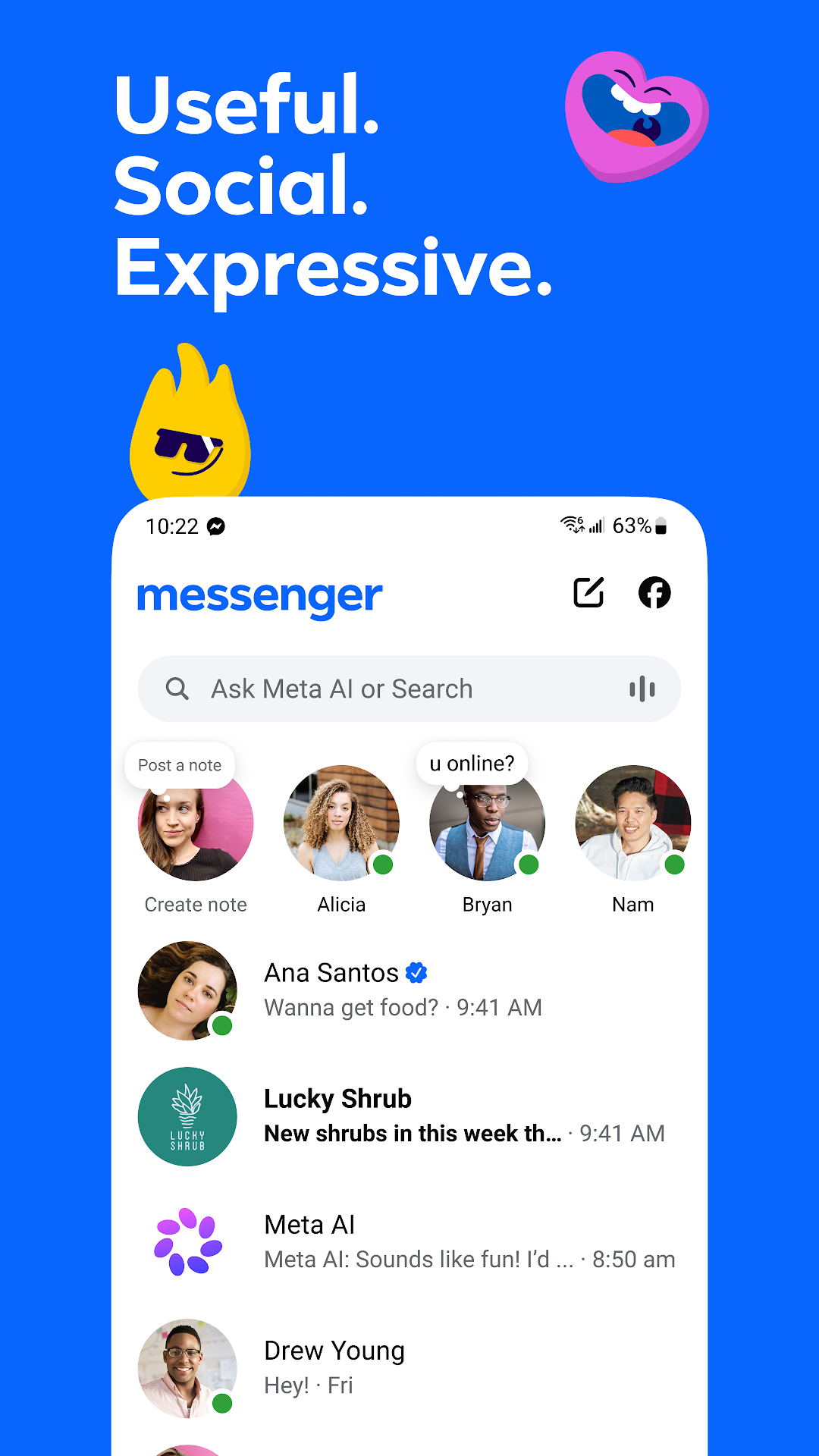
| Tên | Messenger |
|---|---|
| Nhà phát hành | Meta Platforms, Inc. |
| Google Play | Google Play ↗ |
| Danh mục | Society |
| Lượt tải | 3 |
| Giá | MIỄN PHÍ |
| Đánh giá |
★
★
★
★
★
0/5
(0)
|
| Tác giả | |
| Cập nhật |
Messenger has passed 7.8 billion downloads on Google Play since August 2011, and every personal one-to-one chat now defaults to end-to-end encryption.
Messenger is a free cross-platform messaging app from Meta Platforms, with version for Android 9.0 and up, at a download size near 82 MB. It started life inside Facebook in 2011 and now runs as a standalone communication app for text, voice notes, audio and video calls, and Instagram cross-app chat. Three things separate it from a plain SMS replacement: default end-to-end encryption on personal chats, Meta AI built straight into the conversation window, and file sharing up to 100 MB for photos, videos, and documents. You can sign in with a Facebook account or use a phone number, and conversations stay saved server-side even if you uninstall and reinstall. The clean build covered here is hosted on APKRUNE.
- Is Messenger end-to-end encrypted, and which chats actually stay private?
- How to send HD photos, 100MB files, and shared albums in Messenger
- Messenger video calls and Rooms: how many people can join
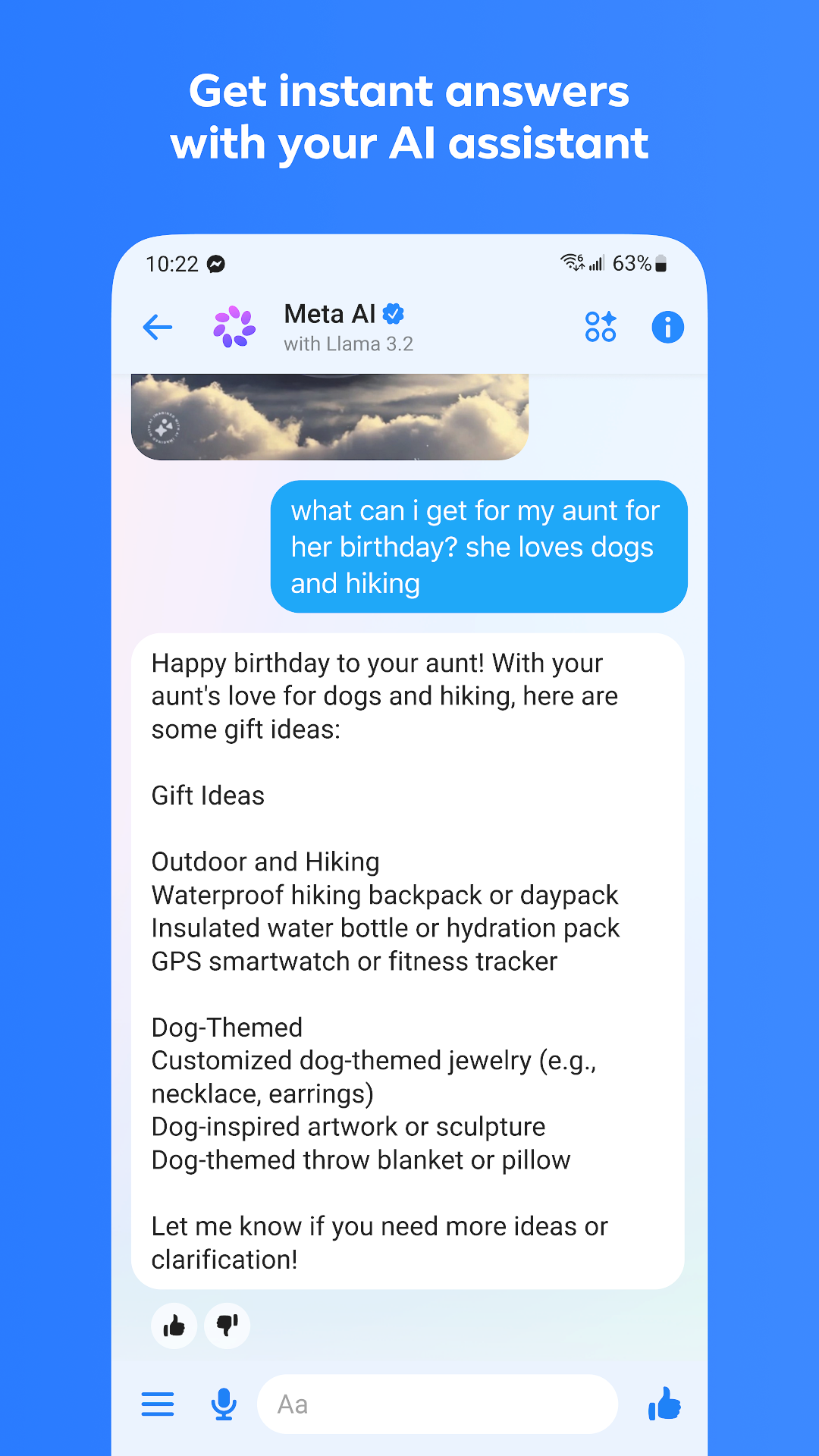
- Meta AI in Messenger: what it does and where it works
- Vanish mode, unsend, and the privacy controls people search for most
- Messenger vs WhatsApp: what each one does better
- What’s new in Messenger version
- Messenger MOD APK features
- Frequently asked questions
Is Messenger end-to-end encrypted, and which chats actually stay private?
Messenger switched on default end-to-end encryption (E2EE) for personal chats and calls at the end of 2023, so most of your one-to-one and group conversations are already protected without turning anything on. The encryption means nobody, including Meta, can read the content of those messages or listen to those calls. What surprises a lot of people is the gap encryption does not cover: metadata. Meta still sees who you talk to, when, and how often, and that contact graph feeds its ad systems even though the message text stays sealed.
Three categories of message are deliberately not treated as private, and this is the part most pages skip:
- Business chats: messages to and from business accounts are not personal messages, so they sit outside the personal E2EE layer.
- Meta AI conversations: anything you send to the in-chat AI is processed on Meta servers, not encrypted end-to-end like a chat with a friend.
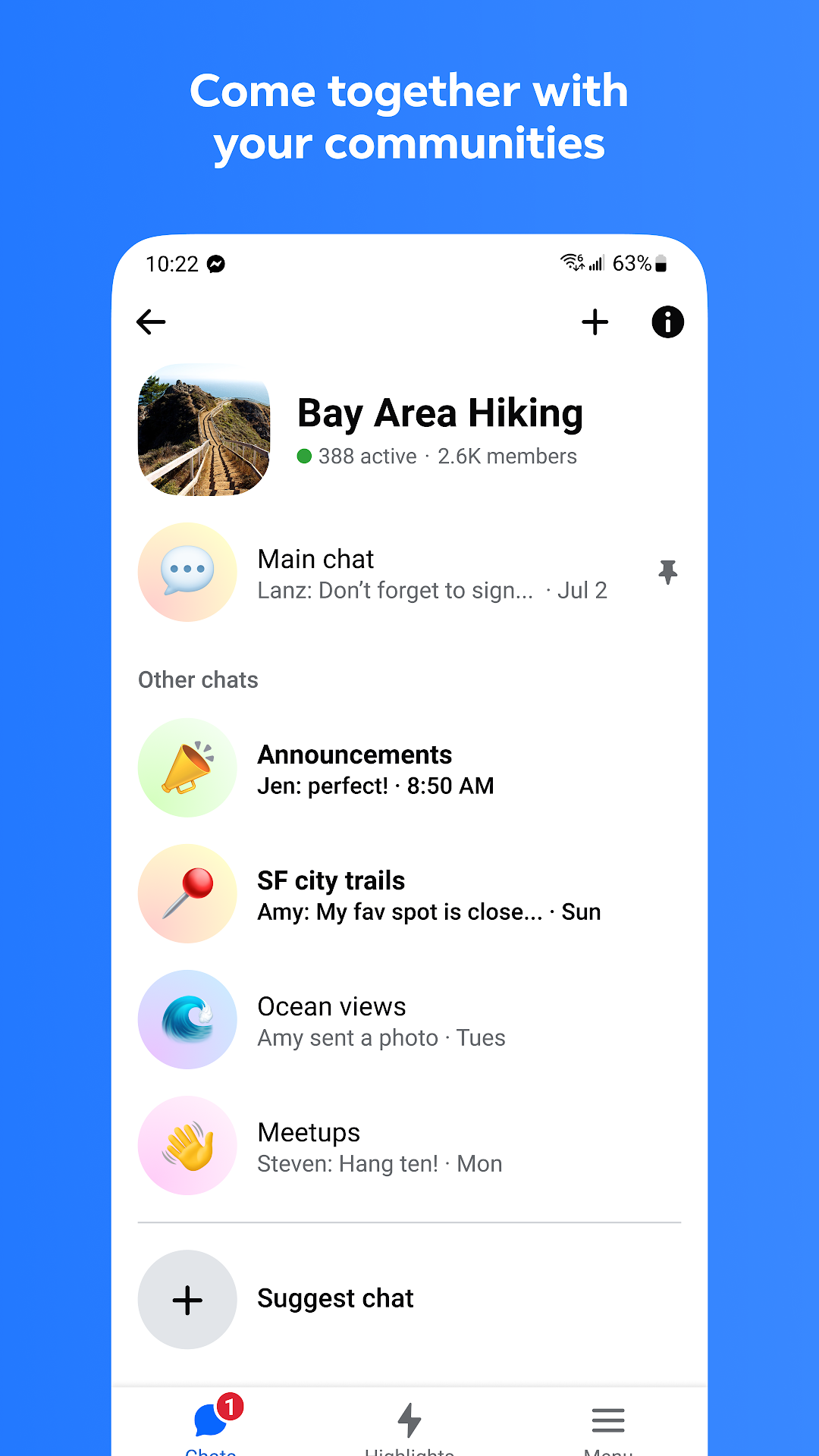
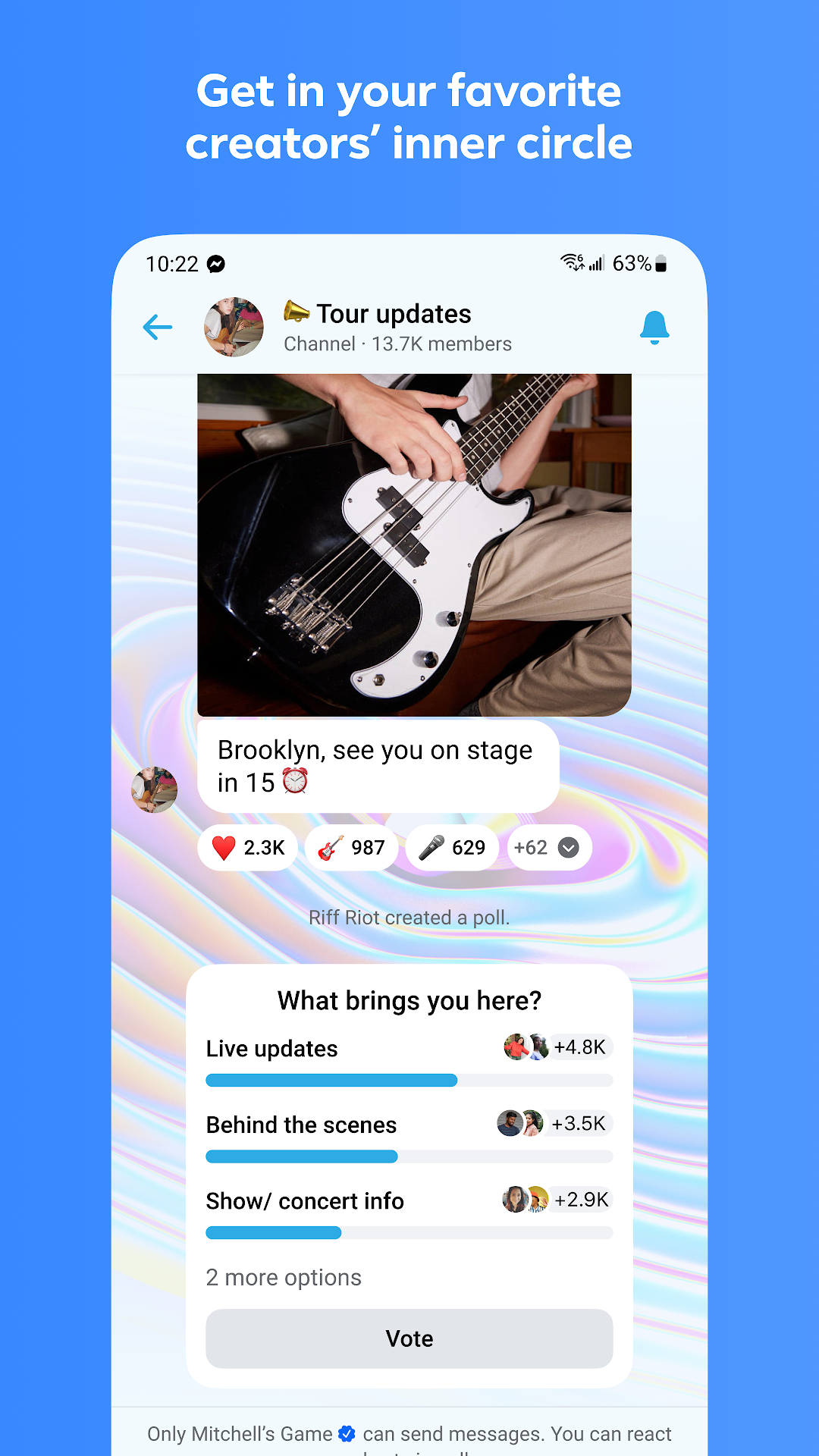
- Channels: broadcast-style channels are built to be more public, so they are excluded from personal encryption by design.
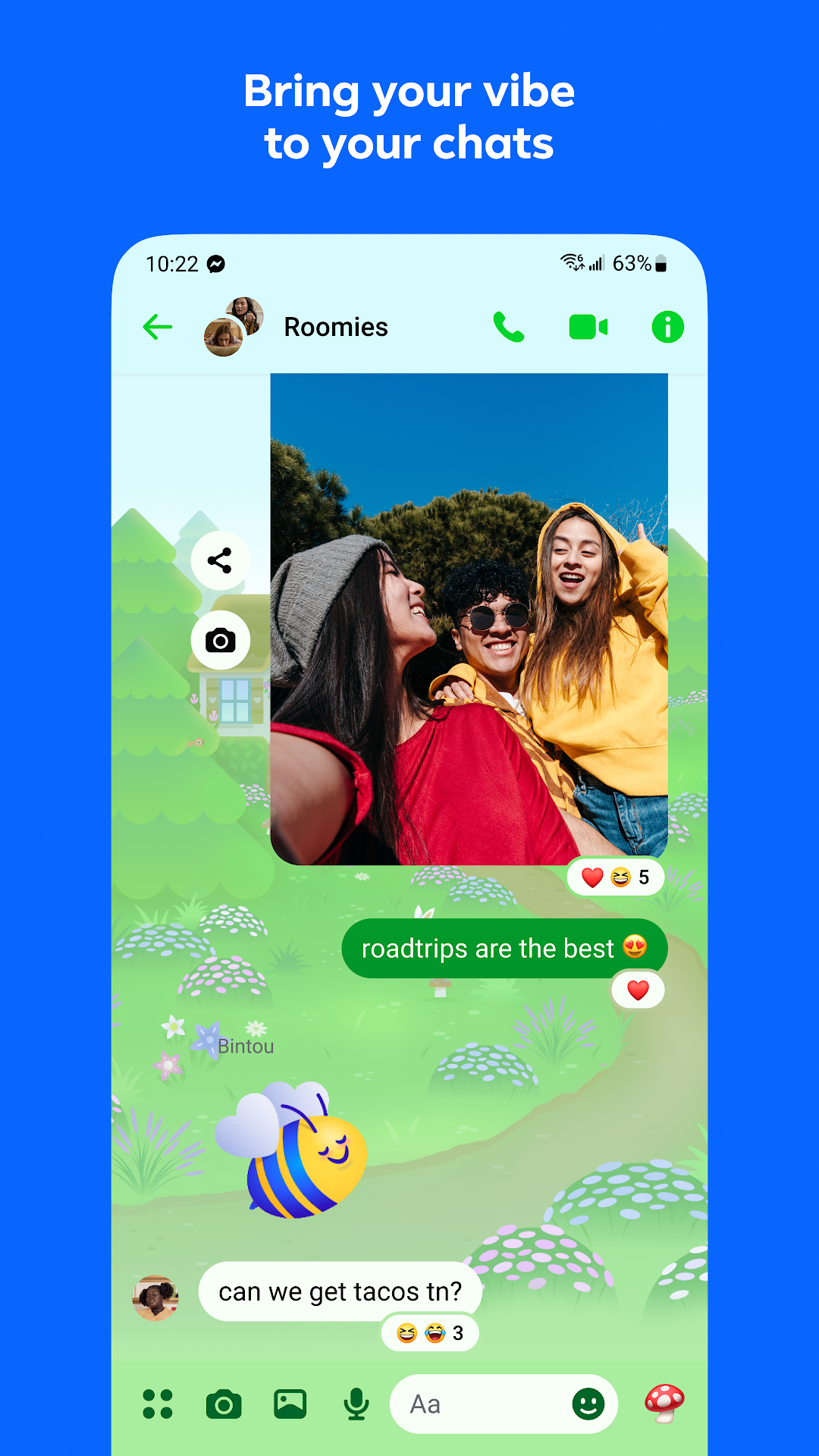
The encrypted experience is no longer stripped down either. Chat themes, custom chat emojis, reactions, group profile photos, link previews, and active status all work inside E2EE threads now, which removed the old trade-off where turning on privacy meant losing features. You can layer disappearing messages on top, setting an auto-delete timer per chat for sensitive conversations.
How to send HD photos, 100MB files, and shared albums in Messenger
Messenger raised its attachment ceiling from 25 MB to 100 MB in 2025, which is the single most useful media change for anyone sending video clips or document bundles. To send a clear photo, pick an image in the chat composer, flip the HD toggle, then tap send; you can tap several photos to push them all in HD at once. Without the toggle, Messenger compresses images by default to save data.
The 100 MB limit covers more than pictures. You can attach Word documents, PDFs, Excel sheets, and zip folders straight into a chat on mobile or desktop, which turns Messenger into an email alternative for files that would otherwise bounce. For groups, the shared albums feature lets everyone in a chat add, view, delete, and download photos and videos in one place instead of scattering them across the thread. To build one, select multiple photos in the composer and tap “create album,” or long-press a single photo and choose “Add to album,” then find it later under the Media button. Shared albums are one feature Meta did not bring to WhatsApp or Instagram DMs, so it is genuinely Messenger-only.
Messenger video calls and Rooms: how many people can join
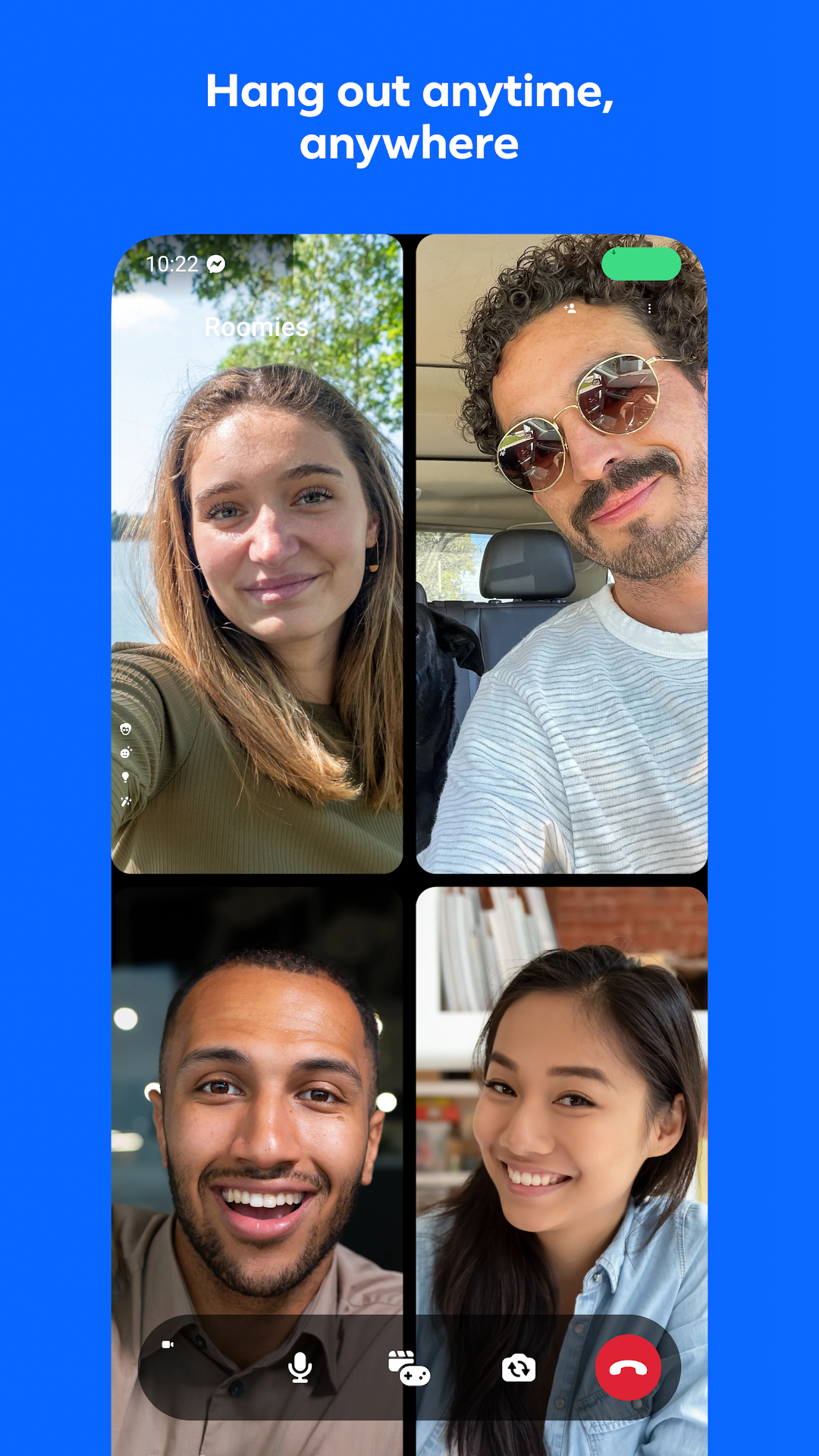
A group chat holds up to 250 members, and a Messenger Room supports up to 50 participants on a single call with no time limit, so a call runs until the last person leaves. This answers the question people search most before planning a group catch-up, and the no-limit part matters because it removes the 40-minute style cap other call apps impose.
Calls work across the family of apps. Because Messenger and Instagram share a messaging backbone since the 2020 cross-app merge, you can call someone on Instagram directly from Messenger without both of you being on the same app. Rooms can be started from a group chat and shared by link, and you can toggle your camera off inside a Room for audio-only privacy. Voice and video both have no duration limit, which is why Rooms became a free stand-in for paid meeting tools.
Meta AI in Messenger: what it does and where it works
Meta AI sits inside the chat window rather than as a separate app, so you can ask it questions, request planning help for a trip or event, and generate, edit, or animate images without leaving the conversation. It answers general questions, gives how-to advice, and helps draft messages, working the same way a normal chat thread does on the surface.
Two limits are worth knowing before you rely on it. First, availability depends on your country and account settings, so the feature appears in select regions and may not show in your app yet; regular chat tools cover everyday needs if it is missing. Second, Meta AI chats are not end-to-end encrypted the way a chat with a friend is, since the AI runs on Meta servers to generate replies. Treat anything sensitive, like medical or financial questions, with that in mind. For casual planning, image edits, and quick research inside a group, it folds into the conversation instead of forcing a separate tab.
Vanish mode, unsend, and the privacy controls people search for most
The most-searched “how do I” questions on Messenger cluster around taking a message back and controlling who reaches you, and the app handles both directly. Unsend gives you two choices when you long-press a message: “remove for everyone” pulls it from both sides and leaves a small “you removed a message” note, while “remove for you” only clears it from your own view. There is no silent full deletion, so the recipient sees a trace if you remove for everyone.
The rest of the privacy toolkit splits cleanly:
- Vanish mode: swipe up inside a chat to enter a mode where each message disappears once the other person has seen it and leaves the chat, useful for throwaway conversations.
- Disappearing messages: set a timer so messages in an encrypted thread auto-delete after a chosen period, separate from vanish mode.
- Message requests: people who are not your friends land in a separate requests folder, so a stranger cannot drop straight into your main inbox until you accept.
- App lock: require Face ID or a fingerprint to open Messenger, so a person holding your unlocked phone still cannot open your chats.
You can also control who can reach you and where their messages are delivered, which keeps anonymous or spam contacts out of the primary inbox.
Messenger vs WhatsApp: what each one does better
Both apps are owned by Meta and both default to end-to-end encryption on personal chats, so the real split comes down to file handling and reach. Messenger ties into Instagram for cross-app messaging and calling, which WhatsApp does not, so if your contacts live across Facebook and Instagram, Messenger reaches all of them from one inbox.
WhatsApp wins on raw file size, accepting attachments up to 2 GB against Messenger’s 100 MB cap, so very large videos belong on WhatsApp. Messenger answers with shared albums in group chats, a feature absent from WhatsApp and Instagram DMs, plus deeper integration with Facebook groups, Rooms for 50-person calls, and the in-chat Meta AI image tools. Privacy-minded users often note that Messenger keeps cloud-stored conversation history tied to your account, while WhatsApp leans on device-side chat history. The choice usually comes down to where your contacts already are rather than a clear winner on features.
What’s new in Messenger version
Version , released on May 22, 2026, follows version 560.0.0.55.69 from May 4, 2026, and continues a run of feature drops alongside routine stability work. The headline additions across recent builds:
- Split Payments: a group-chat tool for splitting rent, travel, and shared expenses with friends and family, so a group can divide a bill without leaving the thread.
- Meta AI image tools: generate, edit, and animate images inside the chat in supported regions, expanding the AI from text answers into visuals.
- Chat themes for encrypted chats: static color and gradient themes now apply to end-to-end encrypted threads, closing the old gap between private chats and styled chats.
- Stability work: the latest notes list bug fixes and performance improvements on top of the feature changes.
Messenger MOD APK features
This MOD build targets the two things stock Messenger users complain about most: the ads that slip into the inbox and the background tracking that runs on top of a roughly 82 MB install. It strips those out while leaving the core chat, calls, and encryption untouched, aimed at people who want a quieter, lighter version of the same app.
No Ads
Stock Messenger inserts sponsored cards between conversations in the Chats list and inside the Stories tray at the top of the inbox. This MOD disables those ad placements from the manifest and dex so the inbox shows only real conversations, with no sponsored card breaking up your thread list. It is most noticeable for heavy users who open the Chats tab dozens of times a day and otherwise scroll past an ad every few swipes.
Trackers and Telemetry Removed
The MOD pulls out the analytics receivers, providers, and telemetry calls that the stock 82 MB build runs in the background to report usage data. Since Messenger’s encryption protects message content but not the metadata Meta collects, cutting these trackers reduces the background reporting the app does about how and when you use it. The chat features, default end-to-end encryption, and Meta AI access keep working as normal.
Lightweight Cleaned Build
Unused “garbage” items are removed from the dex and the package is kept on arm64-v8a, so the install runs leaner than the full store version without dropping calls, HD photo sending, or the 100 MB file limit. This helps on older Android 9 and 10 devices where the stock app feels heavy during video calls or large file transfers.
The note below explains exactly what the MOD changes before you download, so there are no surprises after install.
| Feature | Stock APK | MOD APK |
|---|---|---|
| Inbox and Stories ads | Sponsored cards shown | Removed from manifest and dex |
| Trackers and telemetry | Active in background | Receivers and providers removed |
| Install footprint | ~82 MB full package | Cleaned dex, arm64-v8a build |
| End-to-end encryption | Default on personal chats | Kept fully working |
| HD photos and 100MB files | Supported | Supported |
| Meta AI in chat | Region dependent | Region dependent, unchanged |
| Android requirement | Android 9.0+ | Android 9.0+ |
Frequently asked questions
Is the Messenger MOD APK safe to use?
The MOD’s main changes are subtractive: it removes ad placements and background trackers rather than adding new code that touches your messages. Default end-to-end encryption on personal chats stays intact, so message content is still sealed. As with any modified app, keep your Facebook login details current and only install builds you trust.
Will the MOD get my Facebook account banned?
Because the MOD removes ads and telemetry instead of faking activity like fake likes or automated messaging, it does not trigger the spam behavior Meta usually acts on. There is still no official guarantee, since any non-store client carries some risk. Avoid pairing it with automation tools and use it the way you would the normal app.
Does Messenger work without a Facebook account?
Yes. You can sign up and use Messenger with just a phone number, no Facebook profile required. Signing in with Facebook adds your existing friend list and syncs across the family of apps, while a phone-number account keeps it as a standalone chat app.
Are my Messenger chats really private?
Personal one-to-one and group chats use end-to-end encryption by default, so the content stays unreadable to outsiders, including Meta. Business messages, Channels, and Meta AI conversations are excluded from that encryption by design, and metadata about who you message remains visible to Meta even on encrypted threads.
Is Messenger free, and does it cost anything to call?
Messenger is free to download and use, and voice and video calls cost nothing beyond your Wi-Fi or mobile data. Rooms for up to 50 people and group chats up to 250 members carry no fee and no time limit on calls.